
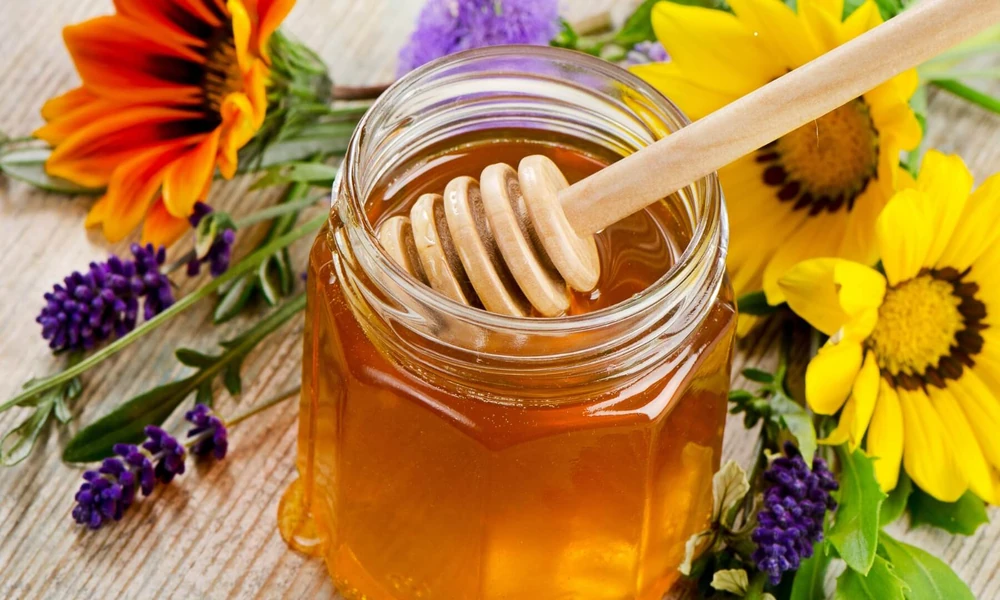
Crack open a jar of Texas wildflower honey next to a standard grocery-store clover variety and you’ll notice it immediately. The color is deeper, closer to amber than gold. The smell carries a faint earthiness underneath the sweetness, almost like warm soil after spring rain. And the flavor? It finishes in layers, not all at once. That’s not marketing copy. It’s botany.
Most people assume honey is honey. It isn’t. The nectar source, the geography, the season, and the colony itself all leave fingerprints on the final product. Texas, with its extraordinary breadth of native wildflowers, produces honey that is genuinely unlike what you find anywhere else in the country. Understanding why takes about five minutes, and it’ll change what you reach for every morning.
The Botany Behind the Flavor
Honey gets its flavor from the floral nectar bees collect, and no state in the continental U.S. offers bees a more varied menu than Texas. Bluebonnets (Lupinus texensis), Indian paintbrush (Castilleja indivisa), Indian blanket, prairie verbena, and evening primrose bloom across the Hill Country and Central Texas prairies from late February through early summer, giving colonies an overlapping buffet of nectar sources across months rather than weeks.
That diversity is the whole story. A monofloral honey like orange blossom or clover is essentially one note played loud. Wildflower honey, especially from a landscape as ecologically varied as Central Texas, is a chord. Some jars lean floral and bright; others carry a slightly tannic, woodsy undertone depending on whether the bees worked more prairie species or cedar-adjacent blooms that season. No two harvests taste identical, and that’s a feature, not a flaw.
The practical effect on your palate: wildflower honey tends to be bolder on tea and more complex in vinaigrettes than clover honey, which reads almost purely sweet. If you bake with it, expect the finished product to carry a subtle floral character that clover simply can’t offer.
The Honey Terroir Triad: A Framework for Understanding Regional Difference
The wine industry uses “terroir” to describe how soil, climate, and geography shape flavor. Honey deserves the same framework. For Texas wildflower honey specifically, three forces converge to produce something distinct. Call it the Honey Terroir Triad:
- Floral landscape. Central Texas sits at the convergence of the Edwards Plateau, the Blackland Prairie, and the Post Oak Savanna, three distinct ecosystems whose bloom calendars overlap. Bees working this zone collect from dozens of native species within a single foraging season, creating layered nectar blends that reflect each region’s specific flora.
- Climate timing. Texas winters are mild enough that colonies stay active earlier in the year than northern apiaries. Bees can begin working spring blooms in February, giving them access to early nectars that northern bees never touch before clover arrives.
- Raw and unfiltered processing. Many Texas small-batch producers skip high-heat processing and fine filtration, which strips pollen and destroys aromatic compounds. What’s left in the jar is as close to what came out of the hive as you can get without eating comb.
All three factors interact. Remove any one of them and the honey becomes something more ordinary.
What the Numbers Say About America’s Appetite for Real Honey
The trend toward regional, minimally processed honey isn’t niche anymore. According to the USDA Economic Research Service, per capita honey consumption in the United States reached a record 2.0 pounds in 2024, nearly double the figure from the early 1990s, a clear signal that Americans have been moving steadily away from processed sweeteners and toward something they perceive as real.
That appetite shows up in pricing, too. The USDA’s National Agricultural Statistics Service reported that U.S. honey prices rose 5 percent in 2024, reaching $2.69 per pound at the producer level, a figure that reflects tightening domestic supply against growing consumer demand. Small-batch, regionally specific honey from named farms sits well above that average, but buyers increasingly consider that premium worth paying when they can see where their honey came from and which blooms fed the bees.
“Honey provides us with a healthier alternative than pure cane sugar or artificial sweeteners… purchasing honeybee products helps to ‘save the bees,’ and therefore they are doing good while sweetening their iced tea.”
David M. Burrows, founder of Arkearth, as cited in The Food Institute’s August 2025 analysis of USDA honey consumption data.
Burrows captures something real here. The surge in honey demand isn’t just about sweetness. It’s about provenance, ecological connection, and trust in what’s actually in the jar.
How to Tell a Quality Wildflower Honey From a Counterfeit
The word “wildflower” on a label means almost nothing on its own. Some large packers blend imported honey with domestic product and call the result wildflower. Here’s a quick checklist for telling the real thing apart:
| Characteristic | Authentic Raw Wildflower Honey | Blended or Processed “Wildflower” |
|---|---|---|
| Color | Deep amber to dark gold, varies by harvest | Uniform light gold, consistent jar to jar |
| Crystallization | Will crystallize naturally over weeks to months | Stays liquid indefinitely due to filtration |
| Flavor | Layered, floral, slightly earthy finish | Flat, one-dimensional sweetness |
| Label transparency | Names the state or region, often the farm | “Product of USA and imported honey” or no origin |
| Pollen content | Visible fine particles, cloudy appearance | Clear, no particulate |
Crystallization is actually your best friend here. Raw honey with its full pollen load and natural enzyme content will solidify over time. That’s chemistry, not spoilage. Gently warm a crystallized jar in a bowl of warm water and it returns to pourable in minutes. If a honey never crystallizes, something was done to it.
How to Shop for Texas Wildflower Honey Without Getting Burned
Buy from producers who name their location. A zip code, a county, a specific region like the Texas Hill Country, any of these signals that the beekeeper knows exactly where those bees foraged. Vague origin claims are a warning sign.
When you’re ready to commit to a jar worth keeping on the counter, you can buy Texas wildflower honey online directly from small-batch producers who harvest from a named apiary location. That direct-to-consumer relationship is the closest thing to buying honey at a roadside stand, except you don’t have to drive to Belton to do it.
Think about format, too. Bear-bottle sizes work well for everyday use and for gifting. Larger 32-ounce jars make economic sense if you’re a heavy user, cook with honey regularly, or want to compare batches across seasons. Whipped or creamed honey varieties are worth trying separately. The texture is entirely different from liquid honey and the flavor reads slightly milder, which suits certain pairings better.
One Practical Way to Use the Difference
The most direct way to understand what makes Texas wildflower honey distinct is a side-by-side tasting with a standard clover honey. Use two plain crackers with a thin spread of each. Take a sip of plain water between them. The clover will read sweet and clean and forgettable. The wildflower will have something else going on underneath, a faint complexity that lingers a beat longer. That’s the foraging landscape of Central Texas in a teaspoon.
Once you taste that difference, paying attention to honey origin becomes automatic. You start reading labels the way wine drinkers read appellations. And the shelf at your local grocery store starts looking pretty thin.
So the question isn’t really whether Texas wildflower honey is worth the upgrade. The better question is: what have you been missing every morning by settling for something that just tastes like sugar?