
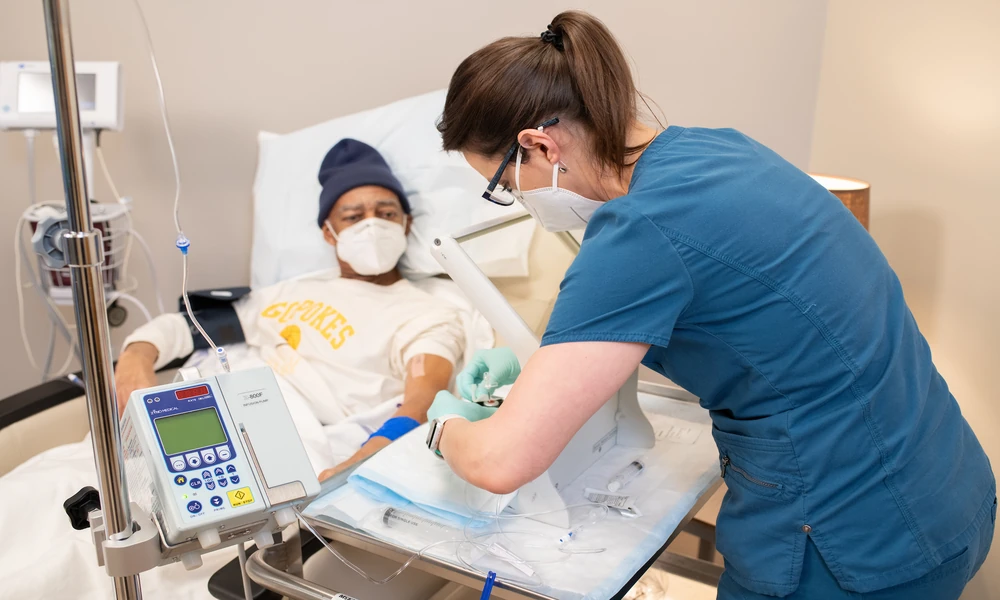
Fifty years ago, a patient with a rare cancer diagnosis got handed a pamphlet and sent home. No peer connections, no disease-specific hotline, no online community, and often, no specialist within a hundred miles. The gap between what medicine could offer and what patients actually needed was enormous. What closed it wasn’t a pharmaceutical company or a government mandate. It was ordinary people who decided that “uncommon” didn’t have to mean “unsupported.”
Rare cancer advocacy has since grown into one of the most operationally sophisticated movements in modern healthcare. Understanding how it evolved, and why it works, matters to anyone who cares about where patient-centered care is heading.
The Long Road to a Diagnosis That Changes Everything
The case for advocacy organizations starts with a brutal, often overlooked fact: rare cancers take an exceptionally long time to diagnose. That delay isn’t a minor inconvenience. It shapes the entire patient experience that follows.
A peer-reviewed survey published in BMC Cancer by Basuroy and colleagues found that the median time from first symptom to diagnosis for neuroendocrine tumors was 53.8 months, with 80% of respondents visiting their primary care physician a median of 11 times before receiving a confirmed diagnosis. That’s nearly four and a half years of wrong answers.
Those years carry a weight that clinical data alone can’t capture. Every misdiagnosis erodes trust in the healthcare system. Every referral that goes nowhere costs emotional energy that patients don’t have to spare. By the time someone finally has a name for what’s happening in their body, they’ve often been through a private ordeal that no one around them fully understands. That shared experience of diagnostic odyssey is precisely what gave early patient advocacy groups their fuel and their focus.
The Three-Stage Advocacy Arc
Most rare cancer advocacy movements follow a recognizable pattern. Call it the Three-Stage Advocacy Arc: Awareness, Infrastructure, Navigation.
The first stage is pure awareness. Someone gets sick, finds almost no disease-specific information, and decides to build what doesn’t exist. Forums, newsletters, and small conferences show up. Word travels slowly, but it travels. The goal in this stage is simple: prove the community exists.
The second stage is infrastructure. As awareness grows, organizations formalize. They build websites, publish educational materials, establish medical advisory councils, and start collecting patient data. This is where the real credibility is earned, because it’s where organizations have to be accountable to both patients and clinicians at the same time. The ones that survive this stage do it by staying relentlessly patient-centered while learning to speak medicine’s language.
The third stage is navigation, and it’s where the transformation really lands. Navigation means meeting a patient at the moment of diagnosis and walking alongside them: into the specialist’s office, into the clinical trial search, into the community of people who genuinely understand what they’re facing. It’s not information dumping. It’s guided movement through an overwhelming system. Peer-to-peer programs, support lines, and caregiver-specific resources all live here. For newly diagnosed NET patients, this navigational support often represents the difference between a reactive, frightened approach to care and one that’s proactive and self-directed.
Why Peer Connection Is Not a Soft Benefit
There’s a temptation to treat peer support as a feel-good add-on, something nice but not essential. The research doesn’t support that view.
A 2023 study using nationally representative data from the National Cancer Institute found that peer support significantly reduces mental distress and positively influences self-care abilities and health perceptions among cancer patients and survivors. This matters because distress doesn’t stay in its lane. When it rises, it bleeds into daily functioning, into how patients communicate with their care teams, and into whether they follow through on treatment decisions.
“Self-advocacy is a key tool for patients to cope with the challenges of treatment. By fostering self-advocacy, patients can effectively self-manage, enhancing their overall quality of life and treatment outcomes.” (Published in PLoS ONE, 2025, qualitative meta-synthesis of cancer patient self-advocacy research)
Advocacy organizations figured this out before the research did. They built peer-matching programs not because it sounded compassionate but because they watched patients stabilize when they found someone who had walked the same path. The data eventually caught up.
What the Best Advocacy Organizations Actually Do Differently
Not every patient advocacy group makes it to Stage Three. The ones that do share a handful of defining traits worth examining.
| Capability | Early-Stage Orgs | Navigation-Stage Orgs |
|---|---|---|
| Patient education | General awareness content | Disease-specific, grade-specific, site-specific resources |
| Community building | Public forums, newsletters | Moderated virtual groups, caregiver-specific channels |
| Clinical connection | Referral lists | Medical advisory councils, specialist directories |
| Research engagement | Fundraising | Clinical trial guides, patient data contribution programs |
| Emotional support | Message boards | Trained peer navigators, wellness coaching, support lines |
The jump from column two to column three isn’t just a matter of organizational maturity. It requires a specific kind of humility: the willingness to ask patients what they actually need rather than assume. The organizations that get this right stay in active conversation with their communities and revise their offerings accordingly.
A Practical Framework for Engaging With Advocacy Resources
If you’re writing about, working alongside, or helping to build patient communities, here’s a grounded way to think about value delivery at each stage of the patient journey.
- At diagnosis: Lead with orientation, not information overload. A single trusted resource that explains terminology, next steps, and who the right specialists are does more good than a thirty-link resource list.
- In the first 90 days: Connect the patient to a peer who has been in the same position. This is not optional. Peer connection at this stage lowers distress and improves self-care behaviors, per the 2023 NCI-based research cited above.
- At treatment decisions: Give patients the language and the confidence to ask hard questions of their care team. Self-advocacy isn’t a personality trait. It’s a skill, and organizations can teach it.
- Through ongoing management: Build for the long haul. Rare cancers are often chronic conditions. Caregiver support, wellness resources, and community events sustain engagement long after the acute crisis period ends.
The Ongoing Work
Rare cancer advocacy isn’t finished. Diagnostic delays remain stubbornly long. Disease-specific terminology still confuses newly diagnosed patients who encounter four different acronyms for the same condition in their first week. Access to specialized centers is deeply uneven across geography and socioeconomic lines.
But the structural shift is real. Patients no longer enter a rare cancer diagnosis alone. They enter a network, built over decades by people who insisted that an uncommon cancer shouldn’t mean an unsupported life. That’s not a small thing. It’s the whole ballgame.
The organizations doing this work now face a new challenge: scaling what works without losing the human texture that made it worth scaling in the first place. That’s a design problem, a funding problem, and a culture problem, all at once. The rare cancer advocacy community has solved harder ones before.