
Every August, HVAC techs across Florida field the same phone call, usually on a Friday, usually around 4 pm, and usually from a homeowner standing in an 84 degree living room. The system ran fine in June. It ran fine in July. Then it didn’t. If your own unit has ever pulled that trick, you already know the awful math of a weekend breakdown: emergency rates, hotel rooms, and a replacement quote you weren’t planning to negotiate on two hours of sleep.
Air conditioning problems rarely arrive out of nowhere. They build quietly for months, in coils that slowly clog and capacitors that slowly weaken, and they pick the hottest week of the year to finally announce themselves. The homeowners who skip that phone call almost always have one thing in common. They scheduled routine service in the spring, before the system ever had a chance to fail.
If you live in Sarasota or anywhere along the Gulf coast, that seasonal pressure is real. Your system runs nine or ten months a year, not three, so it accumulates wear at a pace most homeowners never stop to calculate. This is why a standing relationship with a local provider like AC Today maintenance services matters more here than it does in, say, Ohio. It gives you a maintenance track record instead of a panicked first phone call in August.
The Real Math of a Neglected System
The U.S. Department of Energy puts it plainly on its site: energy.gov notes that heating and cooling accounts for the largest share of a typical home’s energy use, and that a neglected system steadily loses efficiency long before it fails completely. A dirty condenser coil doesn’t file a complaint. It just runs longer, pulls more watts, and shortens its own life while you wonder why July’s electric bill jumped.
Here’s the part that stings: you pay twice. Once in higher power bills month after month, and again at the end, when a repair that could have been a $200 part becomes a $9,000 replacement because the compressor cooked itself during a heat wave. I’ve watched this exact sequence play out in my own neighborhood more than once, and it almost always traces back to the same decision, made the previous spring, to put off the tune-up.
Warranties matter too. Most manufacturers require documented annual service from a licensed company to keep the warranty valid. Skip the visits and you can end up holding the full bill for a failure the warranty would have covered.
But It Works Fine, So Why Bother?
This is the objection every tech hears, and it’s a fair one. A system that’s cooling today feels like a system with nothing to fix. But air conditioning is a slow-decline machine. Refrigerant charge drifts, blower motors collect dust, drain lines grow algae in Florida humidity, and contactors pit and stick. None of that shows up as a symptom until the margin is gone.
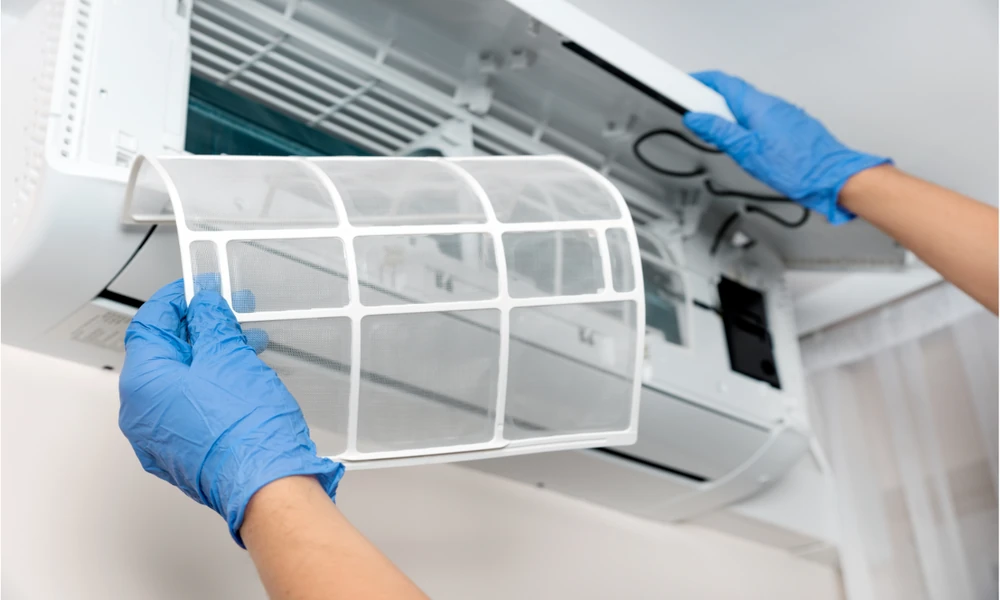
Maintenance is how you find the margin. During a proper visit, a good tech checks refrigerant charge against manufacturer spec, cleans the condenser coil, flushes the condensate drain, inspects the capacitor and contactor, tests amp draw against the data plate, and swaps the filter. That’s not a luxury list. Every item on it corresponds to a failure mode that takes systems down in July, and every one costs far less to address on a scheduled Tuesday than on a holiday weekend.
Why Florida Systems Age Faster
Published EPA guidance at epa.gov covers how indoor air quality and moisture management tie directly into how hard an HVAC system has to work, and coastal Florida stacks that pressure higher than almost anywhere else. Humidity, salt air near the coast, pollen loads, and a cooling season that never really ends all accelerate wear.
Salt air is the quiet one. If you’re within a few miles of the water, from Longboat Key down past the mainland, your outdoor condenser lives in a mildly corrosive environment year round. Coil fins and cabinet screws degrade faster here than the national average, which is exactly why the condensing unit deserves an annual rinse and inspection rather than a once-in-five-years glance. I’d rather pay for that rinse every spring than replace a condenser coil out of season.
Contractors set service standards through trade bodies such as ACCA, and the general guidance has held steady for years: service cooling equipment at least once a year, and twice is not overkill in a climate like ours. Two visits a year is the difference between reacting and planning.
A Maintenance Rhythm You Can Actually Keep
You don’t need to memorize refrigerant charts. You need a calendar rhythm and a couple of habits that take ten minutes a month.
- March or April: full tune-up before the season starts. Coil cleaning, charge check, capacitor inspection, drain flush.
- Monthly, May through October: swap or rinse the filter, look at the outdoor unit, and clear any leaves or grass clippings from around it.
- October or November: a second service visit, or at minimum a heating-side check if you run a heat pump.
- Always: keep the two feet around the condenser clear and don’t let mulch or plants block airflow.
One habit beyond the calendar: write down the amp readings and refrigerant charge your tech reports each visit. It sounds fussy, but it gives the next visit a baseline, and small drifts get caught early. Our household keeps it on the inside of the closet door next to the filter sizes.
What to Ask Before You Sign Up
Maintenance plans vary more than they should. Ask four questions before you commit.
- How many visits per year, and what does each one include? A plan that doesn’t name coil cleaning and a charge check is a filter swap with a nice brochure.
- Do you document visits in writing? You need that paper for warranty claims.
- What happens if you find a problem? Are repair costs separate from the plan fee, and how are parts priced?
- How fast do plan members get service in peak season? Priority scheduling is often the single most valuable thing you’re buying.
Frequently Asked Questions
How often should I get my AC serviced in Florida?
Twice a year is the honest answer. Once in spring before heavy use, once in fall. If you only budget for one, put it in spring.
Can I just replace the filter and call it maintenance?
No. Filters protect airflow. They do nothing for refrigerant charge, capacitors, drain lines, or coil cleanliness, and those are the things that take systems down.
Is a maintenance plan worth it if my system is under five years old?
That’s precisely when it’s worth it. New equipment is warranty-sensitive, and documented service keeps your coverage intact while establishing the baseline readings that make future problems obvious.
Don’t Be the August Phone Call
Nobody regrets a spring tune-up. People regret the holiday weekend replacement quote, the hotel stay with two kids and a dog, and the compressor that died two months before the warranty expired because nobody documented the annual visits. The habit that prevents all of it is boring, cheap by comparison, and takes one phone call a year. Pick your month, set a reminder right now, and get on the schedule before the heat does it for you. When was the last time anyone actually looked at your outdoor unit?