
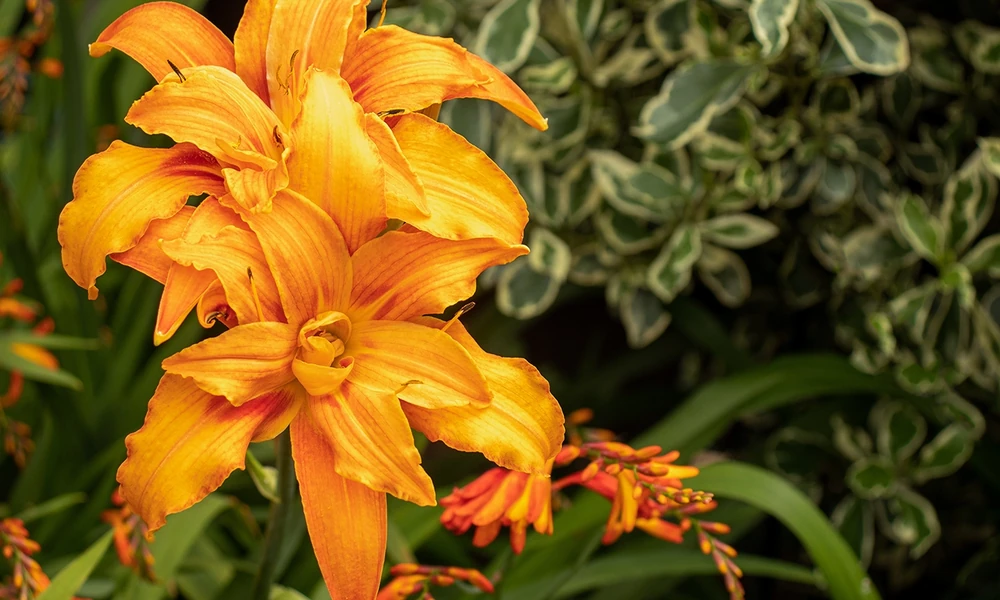
Yellow can be a quiet connecting colour or the liveliest thing in a border. A pale trumpet among cream flowers behaves differently from a golden bloom against dark foliage, even before flower size and shape enter the picture. Shopping for yellow daylilies becomes more rewarding once those possibilities are separated.
The ten suppliers in this guide offer British gardeners named yellow-flowered daylilies, with enough detail to compare the actual plants. The selection includes pastel doubles, lemon-coloured flowers, taller pale trumpets and several routes to Stella de Oro. It is designed to help you choose both a shade of yellow and a practical offer, rather than assume that every yellow daylily will produce the same effect.
Start with one yellow you actually like. Pale lemon can carry a gentle scheme; gold can wake up a darker one. Then vary the shape. A double adds fullness, a trumpet opens the face, and a small star gives a lighter rhythm. We can keep the colour idea simple and still have plenty to choose between.
Comparing yellow as a planting choice
A named yellow-flowered offer is the starting requirement. Shade, shape and stated height explain the differences, while pot formats distinguish products of the same cultivar. The nursery’s own wording stays with each offer. This lets us compare actual choices without turning slightly different colour descriptions into supposedly different plants.
Cabbage Flower starts softly, with a pastel double. Lemon Bells changes the shape, two Double River Wye offers compare the same lemon flower, and Marion Vaughn carries pale yellow higher. Lower Happy Returns and Stella de Oro options follow before tall citrina closes the list. The order gives yellow several jobs in a planting; it makes no claim to measure which is brightest or which will perform best.
1. Swallowtail Daylilies
Double flowered Daylilies at Swallowtail Daylilies include Cabbage Flower, a pastel-yellow option for British gardeners who want colour and floral fullness together. The nursery describes a four-and-a-half-inch double bloom on a seventeen-inch flowering stem.
Soft colour, full flower, low position: that is the useful combination. Cabbage Flower’s seventeen-inch stems keep the double bloom relatively near the ground. The pastel shade can join a gentle palette while the extra petals give it presence. We do not have to choose a fierce gold to make yellow noticeable.
The nursery describes Cabbage Flower as very early in the daylily season. That matters when planning a yellow sequence. A plant chosen to connect with earlier flowers has a different job from one intended to brighten a later summer gap, and the double form does not change that calendar.
Set Cabbage Flower beside Lemon Bells in imagination. One keeps the yellow low and full; the other lifts a clearer yellow with a darker reverse. Either could begin the scheme. The surrounding plants and the desired season will tell us which beginning makes more sense. Swallowtail Daylilies supplies pot-grown plants for establishing the chosen cultivar.
2. Macplants
Lemon Bells has clear-yellow flowers with a mahogany-coloured reverse in the Macplants description. The supplier gives a June-August flowering period and a height and spread of seventy-five centimetres. There is more to this offer than a single yellow swatch.
Walk past Lemon Bells and the reverse becomes part of the interest. Clear yellow faces one direction; mahogany adds a darker note from another angle. That is an appealing choice for a bed seen from several sides. At a listed 75cm high and wide, it also occupies a substantial middle position, quite different from the low double that opened the list.
Macplants’ June-to-August calendar gives the clear yellow a broad summer setting. A repeated group could hold that colour through the middle of the planting, with the darker reverse supplying detail as the view changes. There is enough character here without adding a strongly contrasting eye to the front of the flower.
3. Claire Austin
Double River Wye provides another route to a fuller yellow flower. Claire Austin describes lemon-yellow doubles, gives a height of seventy-five centimetres and lists July flowering. The supplied product is a two-litre pot.
Put Double River Wye higher on the sketch than Cabbage Flower and give it the July position in Claire Austin’s calendar. The lemon double now has a different job despite sharing that basic yellow-and-full idea. A 2-litre pot supplies the starting plant. If the flower is right, Farmyard’s next offer lets us compare a second route to the same cultivar.
4. Farmyard Nurseries
Farmyard also offers Double River Wye in a two-litre pot, describing lemon-yellow double flowers, a sixty-five-centimetre height and a July-September season. The cultivar is the same; the seller’s growing guidance is not identical.
Farmyard extends its calendar from July to September and places the same lemon double at 65cm. Those are the nursery’s estimates, with actual timing dependent on the plant and conditions. For a later-yellow plan, the wider window is worth considering. The 2-litre format matches Claire Austin’s stated capacity, making this a direct product comparison once Double River Wye is the flower wanted.
5. Great Dixter
Marion Vaughn opens the flower into pale-yellow trumpets. Great Dixter lists a height of one metre and a July-August season, with a one-litre pot available when reviewed. It gives the yellow scheme a taller and less densely filled floral form.
That can be useful when the border already contains several rounded or double flowers. The paler colour and trumpet shape offer a change of expression while keeping the overall palette connected. Repeating yellow through contrasting forms can create variety without introducing another strong colour.
The metre-high description also shifts the position of the yellow. Instead of concentrating all the light notes near the front, Marion Vaughn may carry one above lower companions. Choose it for that combination of pale colour, simple shape and stated height, then plan the July-August companions around its published season.
6. Bluebell Cottage Gardens
Happy Returns brings lemon yellow back towards the lower part of the planting. Bluebell Cottage describes a compact daylily around forty centimetres tall, with abundant yellow flowers. A nine-centimetre pot provides a dispatchable option.
Choose the 9cm option for the listed dispatch route, or investigate the 1-litre plant if collection is practical. Bluebell Cottage also has a separate seasonal bare-root arrangement. The choices lead to the same Happy Returns. Its lower lemon-yellow role can be settled first, leaving access and starting format to settle the order.
A low yellow repeat can bring the colour back towards a path after the taller Marion Vaughn. That is enough of a job for Happy Returns. Give the eventual clumps their space and let the repeated lemon note connect the near view with the flowers above it.
7. Burncoose Nurseries
Burncoose describes Stella de Oro as yellow, with star-shaped flowers around six centimetres across and a height of thirty centimetres. Its one-and-a-half-to-two-litre pot is a larger-container route to a lower-growing yellow choice.
Small stars give yellow a different rhythm. Burncoose’s 6cm flowers at 30cm would put that finer detail near the ground, where broad doubles might feel too heavy. The 1.5-2-litre pot supplies a clearly described start. The nursery also calls Stella de Oro remontant, meaning it can flower repeatedly during the season. That is welcome potential added to a flower whose low yellow role should already make sense.
8. Champion Plants
Champion’s Stella de Oro offer uses a golden-yellow description and lists nine-centimetre and two-litre pot options. This gives a buyer another route to the same named cultivar, with container choice forming part of the purchase.
Golden yellow suggests a stronger, warmer note than the pale yellow of Marion Vaughn. In a planting containing darker leaves or deeper reds, that sort of yellow may provide a more emphatic contrast. The cultivar’s name connects this offer to the Burncoose entry, while the seller’s wording and product options describe its own catalogue presentation.
Check the availability of the particular pot variant selected. Champion also specifies delivery exclusions, so destination and product need to be considered together. For an eligible order, the appeal is a named lower-growing yellow daylily with a choice of supplied format, rather than an unspecified yellow assortment.
9. Bluebell Nursery & Arboretum
Bluebell Nursery & Arboretum lists Stella de Oro in a three-litre pot and describes its flowers as canary yellow. This is a different business from Bluebell Cottage Gardens, which offers Happy Returns earlier in the selection.
Once Stella de Oro is chosen, this 3-litre product deserves a place in the order comparison. Bluebell Nursery & Arboretum gives a height of 30-40cm and a June-to-July season. Its canary-yellow description suggests a bright low note, with a larger starting container than the 9cm offers. The mature flower remains the chosen cultivar, whichever product is selected.
10. Hoo House Nursery
Hemerocallis citrina rounds out the palette with lemon-yellow, scented flowers on a plant described at one hundred centimetres. Hoo House gives it a July-August season. It returns the yellow to a higher layer while introducing a botanical species alongside the named cultivars.
Hoo House sells citrina for collection. Enquire before visiting if the scheme needs this tall lemon-yellow species for later summer. Its July-August description gives the purchase a different purpose from adding another low Stella de Oro.
Picture the yellow at both levels before deciding. Low stars can lead the eye along a path, while citrina carries the colour upwards. A local buyer might use both; someone needing delivery can pursue the higher pale-yellow role through the Marion Vaughn offer above.
Carry one yellow through several shapes
You do not need every shade in the list to make an interesting border. A restrained scheme might repeat pale or lemon yellow while changing the flower’s height and fullness. A brighter scheme could use a golden note more sparingly as punctuation among other colours.
Keep one yellow thread running through the final selection. It might be soft lemon in both a double and a taller trumpet, or a stronger low gold repeated beside darker foliage. Change the shape or height where the planting needs variety, then stop. Yellow can do plenty of work without every available shade joining the bed at once.
Source note: Yellow shades, flower forms, heights, seasons and product formats are taken from the individual suppliers’ cultivar descriptions. Repeated cultivars are compared as alternative offers; catalogue colour words are not presented as laboratory colour measurements.