
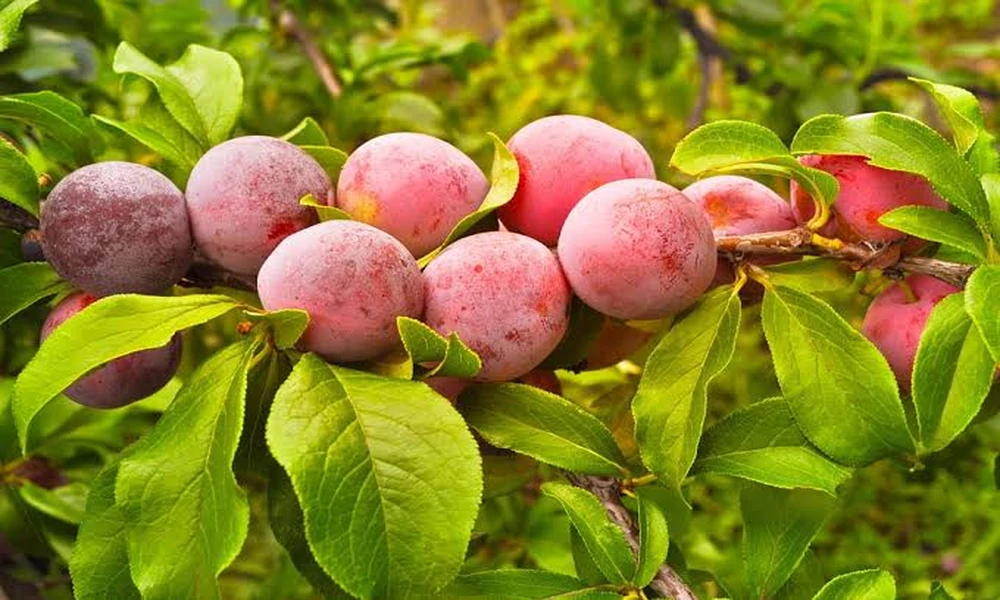
A fruit tree in a patio pot will eventually need more than the space occupied by its container. You will carry water to it, reach into its branches, renew compost and find somewhere for the wet pot to drain. In a UK garden where the tree is staying in that container for years, these ordinary jobs are part of choosing the supplier.
Start with the kind of small tree you want to look after. A naturally dwarf peach grows differently from an apple on a very dwarfing rootstock. A narrow trained tree keeps its outline through pruning. A fig can be grown with its roots restricted, but it still needs an owner willing to manage it. Each can make sense on a patio; they suit different routines.
The delivery pot is only the beginning. A tree sold in a container may be intended for planting in the ground, and even a suitable patio tree may need a larger pot soon after arrival. Permanent container growing means planning for its next several seasons, including the weeks when watering is inconvenient and the afternoon when repotting becomes necessary.
How the practical choices were made
The ten suppliers were selected for documented compact forms or fruit trees specifically discussed for container growing. Their offers were compared by growth habit, rootstock where stated, delivered size and the care information attached to that form. The sequence moves through narrow trained trees, genetic dwarfs, dwarfing rootstocks and fruit that responds to deliberate root restriction.
This is a reading of the available plants and their growing requirements, not a patio trial. No container size is treated as universally sufficient for every tree. The RHS guidance on growing fruit in pots supplies the broader context: suitable plants still need adequate compost volume, drainage, water and feeding.
Top 10 UK Fruit Tree Suppliers for Long-Term Patio Pots
1. Chris Bowers & Sons
You can arrange a slim fruit tree beside a patio without giving over the whole seating area to its crown, and ChrisBowers sells a UK supercolumn range with instructions for maintaining that form in containers. Apples, pears, plums and cherries are among the choices. The narrow outline is maintained through pruning, so buy into the growing method as well as the fruit.
The nursery names M27 for its supercolumn apples, Quince C for pears, Pixy for plums and Gisela 5 for cherries. Record the actual cultivar and rootstock when ordering. Then decide where the pot and any required support will stand. Leave room to reach the side shoots; squeezing a tree between furniture may save floor space while making the annual work awkward.
The guide follows the tree beyond planting into management of the leader, side growth and compost. That continuity is the attraction of this range. You can choose a familiar fruit and a defined narrow form, then keep returning to the care required to maintain it. Set pot size, support and pollination for the individual tree and site. Those details give the patio arrangement a better chance of remaining manageable several summers from now.
2. Ornamental Trees
Garden Lady keeps things compact through its own growth habit. Ornamental Trees describes this peach as naturally dwarf and supplies a version top-grafted at 45cm in a 9-litre pot. That raised starting point tells you something about where the little crown will sit beside the container.
Picture reaching into those branches to inspect blossom or pick fruit. A naturally small crown can make those jobs comfortable, while the permanent pot still needs enough volume and drainage. Choose a sunny position with access around it. The appeal here is a compact peach whose shape does much of the space-saving work, leaving you to concentrate on watering, feeding and timely seasonal care.
3. Orange Pippin Fruit Trees
Pick the M27 version of Rosette at Orange Pippin and the small-tree choice is explicit. The pot-grown offer uses an 11.5-litre container; M26 and MM106 versions of the same apple belong to different comparisons.
This is an apple with a little branching crown, so allow width around the pot as well as height above it. Its pink-marked flesh is an appealing extra, but M27 is the feature that makes this particular offer relevant to the container plan. Arrange suitable support and establish the pollination requirements before planting. A compatible apple nearby may solve the latter; a second arbitrary pot will not.
The delivery container gives you a starting volume. Plan the next pot and the compost renewal as the roots develop, rather than assuming the nursery container completes the job.
4. Pomona Fruits
Pomona’s Sibley’s Patio Flavorcot is a deliberately compact version of the apricot, using a dwarfing Montclair selection and a particular grafting technique. That specification is the reason to pursue it for a permanent pot. An ordinary Flavorcot can ask for a different amount of room.
The dedicated patio listing was out of stock when inspected, so this may be a next-season purchase. Pomona also lists dwarf Aprigold. With the container still empty, there is time to choose between those compact approaches and prepare the warm position. Keep the intended format written beside the cultivar name; it is the detail most easily lost when a tempting alternative becomes available.
5. Thompson & Morgan
Thompson & Morgan’s mini range lets you begin with the fruit: Sylvia cherry, Black Amber plum or Mini Conference pear. A small starting plant can make sense when you want to grow the patio arrangement gradually, fitting the pot and support to the developing tree. Compare the delivered size before expecting an immediate display.
Keep the retailer’s patio pruning guide with the order. As the tree matures, the work follows its fruit type, with different timing for apples and pears from stone fruit. A quiet first season is not a promise that there will never be anything to prune. The range suits a gradual project precisely because you can learn the tree’s growth while the permanent arrangement develops around it.
6. Frank P Matthews
Garden Aprigold takes a naturally small approach to apricots. Frank P Matthews describes it as a genetic dwarf with full-sized fruit, designed for patios and limited spaces. Less vigorous top growth can make an apricot easier to accommodate close to the house.
Its page says that it is unavailable online. Treat it as an enquiry through the grower’s retail range, with another confirmed compact offer as an alternative if timing matters.
The nursery’s container advice is useful once a tree is secured: move into an appropriate larger pot and maintain even moisture. A dwarf crown may simplify pruning, but the roots still depend on the compost you provide. Give that part of the arrangement as much care as the blossom.
7. Victoriana Nursery Gardens
Brown Turkey fig is the more hands-on container project. Victoriana supplies a potted plant around 30-60cm and discusses a large pot as a means of root restriction. You are choosing a way of managing the fig, not buying a permanent miniature.
Set aside a stable position with warmth and room for leafy growth. Once a large container is filled and watered, casually moving it out of the way becomes an unappealing job. Access for watering and later root work should be built into the layout.
The reward of this choice is a different fruit and a different presence on the patio from a small apple or peach. It makes most sense when you want to grow a fig and are happy to maintain the container system that keeps it there.
8. Roots Plants
Roots’ patio Flavorcot arrives in a 4.5-litre pot at about 60-90cm including the container. The same page also offers a larger tree on St Julien A. Keep the patio option selected if that is the form your plan requires; changing the dropdown can change the tree’s long-term demands.
The smaller starting scale leaves room to establish the permanent pot without immediately filling the corner with branches. Delivery follows the relevant grower’s availability, so prepare the container around the confirmed version and arrival window. This is a practical comparison when you want a compact apricot now or in the next available batch, with the ordinary garden tree kept clearly separate.
9. YouGarden
Little Vic, Little Conference and Little Stella give YouGarden’s potted range a familiar plum, pear and cherry choice. Follow the individual description to see how the chosen tree is kept compact. The word potted tells you how it arrives; the patio specification should explain the years afterwards.
If a decorative container is included in an offer, compare it with the volume and drainage the tree will need as it grows. An attractive package can still be only a starting arrangement. YouGarden is a straightforward retail route for choosing one familiar fruit, provided you keep that longer view. Plan where the watering can or hose will reach before deciding which corner gets the tree.
10. Trees Online
Compacta at Trees Online arrives as a two- to three-year-old apricot in a 12-litre pot, with St Julian A named in the selector. This is more developed starting material than a small young patio plant, but the selector and description disagree about eventual size. Resolve that difference before committing a restricted corner to it.
The retailer describes container suitability and an upright compact habit. Those details justify an enquiry for a larger patio pot; they do not make the tree interchangeable with a genetic dwarf. A strict height limit favours a better-defined small form unless the supplied Compacta’s growth can be clarified.
Put the empty permanent pot in place before any tree arrives. Walk past it with the chairs pulled out, leave access to its rim and drainage, and make sure the everyday watering route works. Later, moisture checks, feeding and occasional compost or root work will keep the arrangement alive. Choose the tree whose routine you can comfortably repeat.
Source note: Official product pages and container-growing resources support the selection. RHS guidance informed the discussion of fruit trees in pots. Size estimates are treated as guides, and conflicting product measurements are identified where they affect the choice.